What Quality Tests Matter Most for Critical Fasteners?
5 Key Direction Attention for Mechanical and Chemical Testing of Fasteners
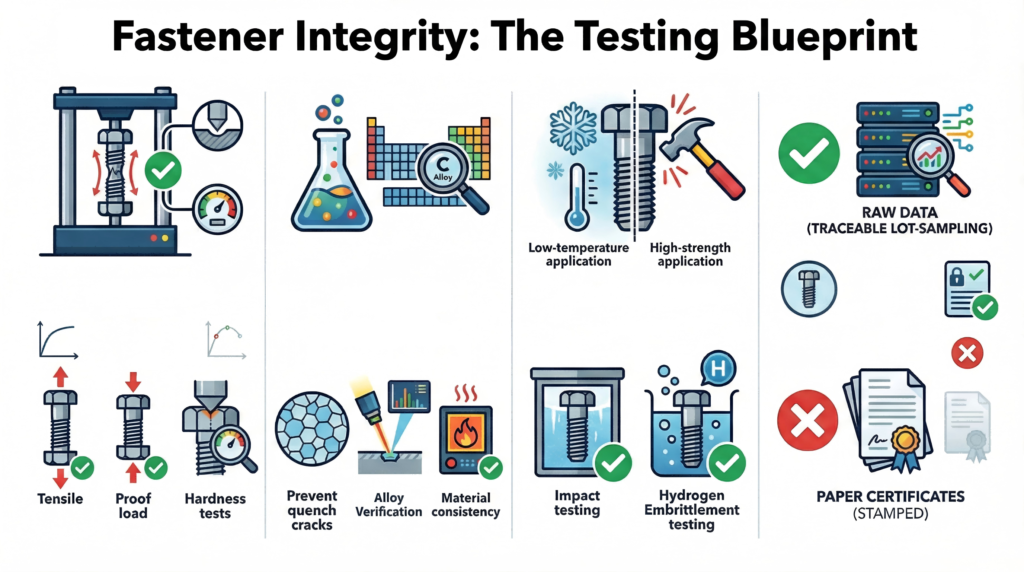
Fastener performance is not defined by appearance or nominal grade marking.
It is verified through controlled mechanical and chemical testing of fasteners.
For critical applications — structural steel, wind towers, pressure vessels, heavy equipment, offshore — testing is not a formality. It is the only objective way to confirm:
- Material conformity
- Heat treatment effectiveness
- Process stability
- Risk of brittle or delayed failure
This article explains what actually matters in mechanical and chemical testing of fasteners, and how technical and procurement teams should interpret results beyond simply “pass or fail”.
1. Mechanical Testing: Verifying Structural Integrity
Mechanical tests validate whether the fastener can sustain load without premature failure.
1.1 Tensile Testing (ISO 898-1 / ASTM F606)
Tensile testing determines:
- Ultimate tensile strength (Rm)
- Yield strength (Rp0.2)
- Elongation after fracture
- Reduction of area
Practical manufacturing insight:
For high-strength bolts (8.8 / 10.9 / 12.9):
- Insufficient yield strength → under-tempering or low carbon equivalent
- Excessively high tensile strength + low elongation → over-hardening, brittle risk
- Wide scatter between samples → unstable quenching process
Engineers should check:
- Is fracture occurring in threaded section or shank?
- Is elongation consistent with strength class?
- Are multiple specimens tested per heat lot?
A single test result is not process capability.
1.2 Proof Load Testing
Proof load test verifies elastic behavior under specified load without permanent deformation.
Why it matters:
In structural assemblies, bolts operate below yield.
If proof load performance is unstable, clamp force reliability is compromised.
Manufacturing causes of proof load failure:
- Thread rolling defects
- Surface decarburization
- Incorrect tempering
For procurement teams:
Always confirm whether proof load is tested on finished bolts, not only machined samples.
1.3 Hardness Testing (Rockwell / Vickers)
Hardness is often overused — but still essential.
Key control points:
- Surface vs core hardness difference
- Hardness gradient across cross-section
- Compliance with standard range
Example (Class 10.9 bolt):
- Surface too hard (>39 HRC) → hydrogen embrittlement sensitivity increases
- Core too soft → inadequate tensile strength
Hardness uniformity reflects heat treatment consistency.
It is a process stability indicator, not just a compliance number.
1.4 Impact Testing (Charpy V-Notch)
Required in low-temperature or dynamic load environments.
Engineers should verify:
- Test temperature
- Specimen orientation
- Energy absorption consistency
Low impact energy often indicates:
- Coarse grain structure
- Improper quench severity
- Temper embrittlement
Impact testing is particularly critical for:
- Wind energy bolts
- Offshore fasteners
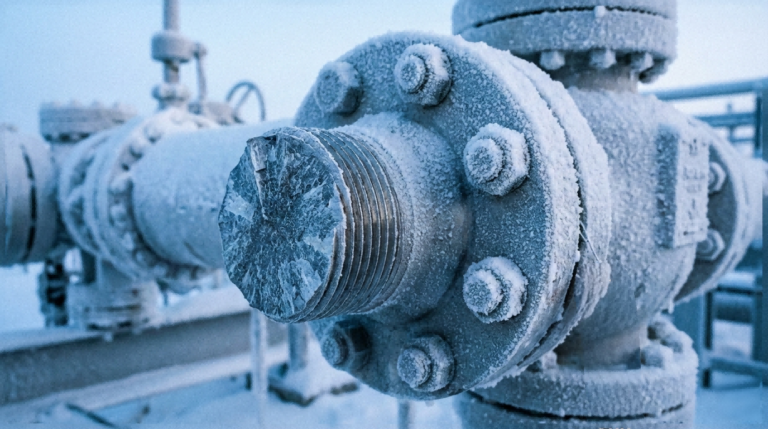
- Cold-region structural projects
1.5 Wedge Tensile Testing (for structural bolts)
Wedge test simulates angular loading and verifies ductility under bending stress.
Failure before reaching minimum tensile strength often indicates:
- Insufficient ductility
- Surface cracks
- Overly high hardness
This test directly evaluates service robustness.
2. Chemical Testing: Verifying Material Conformity
Mechanical performance originates from chemical composition.
Chemical testing confirms:
- Carbon content
- Alloying elements (Mn, Cr, Mo, B, etc.)
- Residual elements (P, S)
- Carbon equivalent
2.1 Spectrometer Analysis (OES)
Optical Emission Spectroscopy is commonly used.
What engineers should check:
- Heat number traceability
- Carbon range stability
- Alloy element control consistency across batches
Small carbon variation significantly impacts:
- Hardenability
- Final tensile strength
- Quench cracking risk
2.2 Carbon Equivalent (CE)
CE influences weldability and crack susceptibility.
High CE:
- Improves strength potential
- Increases risk of quench cracks
- Increases hydrogen sensitivity
For high-strength bolts, CE must balance strength and fracture resistance.
2.3 Decarburization & Carburization Inspection
Surface carbon variation impacts fatigue life.
Excessive decarburization leads to:
- Reduced surface hardness
- Thread root fatigue cracks
Standards define maximum allowable decarb depth.
Microscopic metallographic inspection is required — visual inspection is not sufficient.
3. Hydrogen Embrittlement Risk Evaluation
For electroplated high-strength fasteners (>10.9), hydrogen embrittlement (HE) risk must be controlled.
Testing methods include:
- Sustained load test
- Delayed fracture testing
- Baking effectiveness validation
If hardness exceeds safe threshold (typically > 39 HRC):
HE susceptibility increases dramatically.
Procurement teams should confirm:
- Post-plating baking process
- Time from plating to baking
- Actual test records, not declarations
4. Why “Certificate Only” Is Not Enough
A material certificate (MTC) showing compliance does not guarantee:
- Process repeatability
- Heat treatment consistency
- Absence of localized defects
Engineers should evaluate:
- Sampling frequency
- Batch definition (heat lot vs production lot)
- Statistical stability
Testing is meaningful only when integrated with process control.
5. Practical Checklist for Technical Procurement
When qualifying a fastener supplier, verify:
✔ Mechanical tests per lot
✔ Chemical composition traceable to heat
✔ Hardness mapping (surface + core)
✔ Decarburization inspection
✔ Impact test when required
✔ HE control records for plated bolts
Ask for raw data, not only stamped certificates.
Conclusion
Mechanical and chemical testing of fasteners are not compliance formalities.
They are validation tools for:
- Material selection
- Heat treatment effectiveness
- Manufacturing stability
- Long-term service reliability
For critical applications, testing data should be interpreted technically — not administratively.
Quality is measurable, but only when measurements are meaningful.