How High-Strength Fasteners Are Made: From Raw Material to Final Inspection
Why Manufacturing Process Matters
In critical industries such as oil & gas, offshore, energy, and heavy equipment, high-strength fasteners are not treated as standard components. Their performance depends not only on material grade, but also on how they are manufactured.
This article explains how high-strength fasteners are made and why each step directly affects strength, toughness, reliability, and long-term performance.
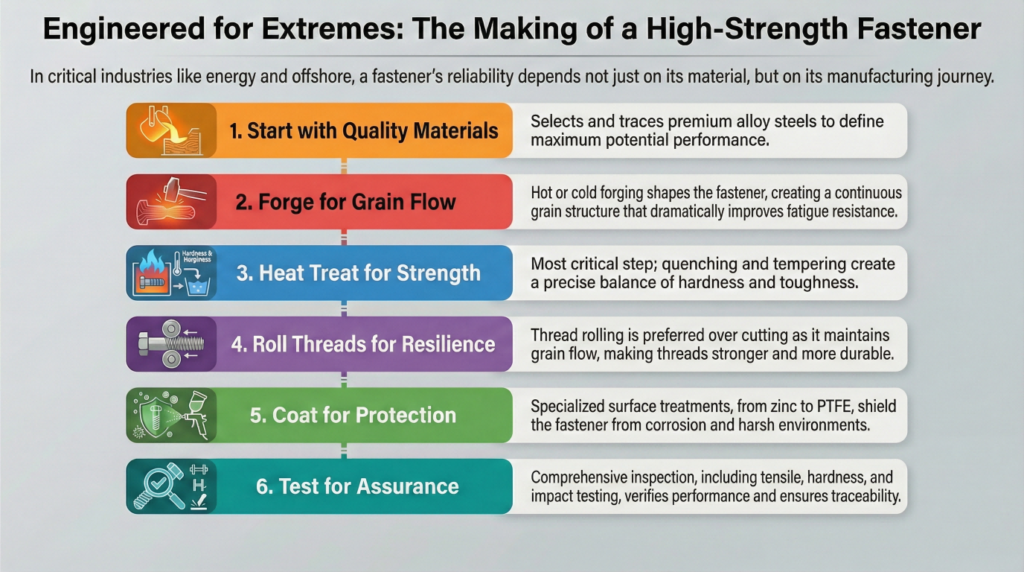
Step 1: Raw Material Selection and Traceability
High-strength fasteners start with carefully selected raw materials. Common materials include alloy steels, stainless steels, and nickel-based alloys designed for extreme environments.
Key considerations at this stage include:
- Chemical composition control
- Cleanliness of steel (low inclusions)
- Heat number traceability
Material selection defines the upper limit of fastener performance. No manufacturing process can compensate for poor raw material quality.
Step 2: Forming Process – Cold Forging vs Hot Forging
The forming method has a major impact on grain flow and mechanical properties.
Cold Forging
- Used for small to medium-sized fasteners
- Improves strength through work hardening
- Provides excellent dimensional accuracy
Hot Forging
- Used for large-diameter or special fasteners
- Allows complex shapes
- Requires strict temperature control to avoid grain coarsening
Proper forging ensures continuous grain flow along the fastener shape, significantly improving fatigue resistance.
Step 3: Heat Treatment – Achieving Strength and Toughness
Heat treatment is the most critical step in producing high-strength fasteners.
Typical processes include:
- Quenching to achieve high hardness
- Tempering to balance strength and toughness
Incorrect heat treatment can lead to:
- Excessive brittleness
- Reduced impact toughness
- Hidden internal stresses
Well-controlled heat treatment ensures consistent mechanical properties throughout the fastener.
Step 4: Machining and Thread Rolling
Threads can be produced by cutting or rolling.
- Thread rolling improves fatigue strength by maintaining grain flow
- Thread cutting is used for special geometries or low-volume production
For high-strength fasteners, thread rolling is generally preferred due to its superior mechanical performance.
Step 5: Surface Treatment and Coating
Surface treatments protect fasteners from corrosion and environmental damage.
Common options include:
- Zinc and zinc-nickel coatings
- PTFE and fluoropolymer coatings
- Passivation for stainless steel fasteners
The coating system must be compatible with service temperature, environment, and preload requirements.
Step 6: Inspection, Testing, and Quality Control
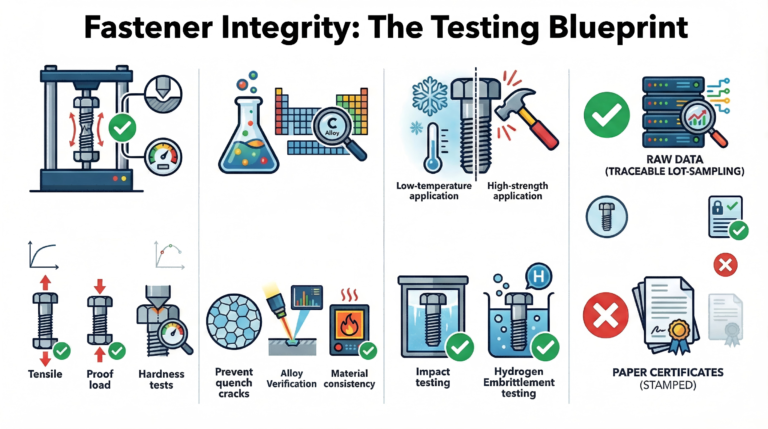
High-strength fasteners require comprehensive inspection and testing, including:
- Tensile and hardness testing
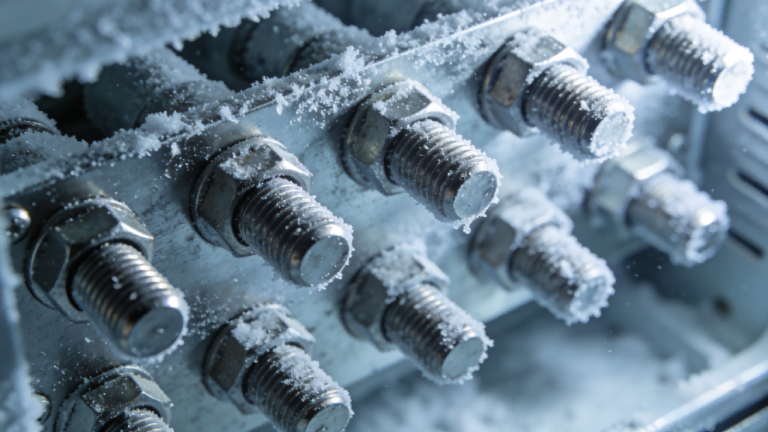
- Impact testing (for low-temperature applications)
- Dimensional inspection
- Non-destructive testing when required
Advanced manufacturers manage inspection data through digital systems to ensure full traceability.
Why Manufacturing Process Determines Fastener Reliability
Even when two fasteners share the same material grade and strength class, differences in manufacturing process can result in very different performance in service.
This is why critical projects require not just certified products, but qualified manufacturing processes.
Conclusion
High-strength fasteners are engineered components, not commodities.
From raw material selection to final inspection, every manufacturing step influences performance, reliability, and safety. Understanding how high-strength fasteners are made helps engineers and procurement teams make better, lower-risk decisions. Many fastener failures are not caused by design, but by improper manufacturing or heat treatment.
If your project involves extreme loads, temperatures, or corrosive environments, manufacturing quality should be a key part of fastener selection.