Mastering Black Oxide: A Comprehensive Guide to Steel Surface Treatment
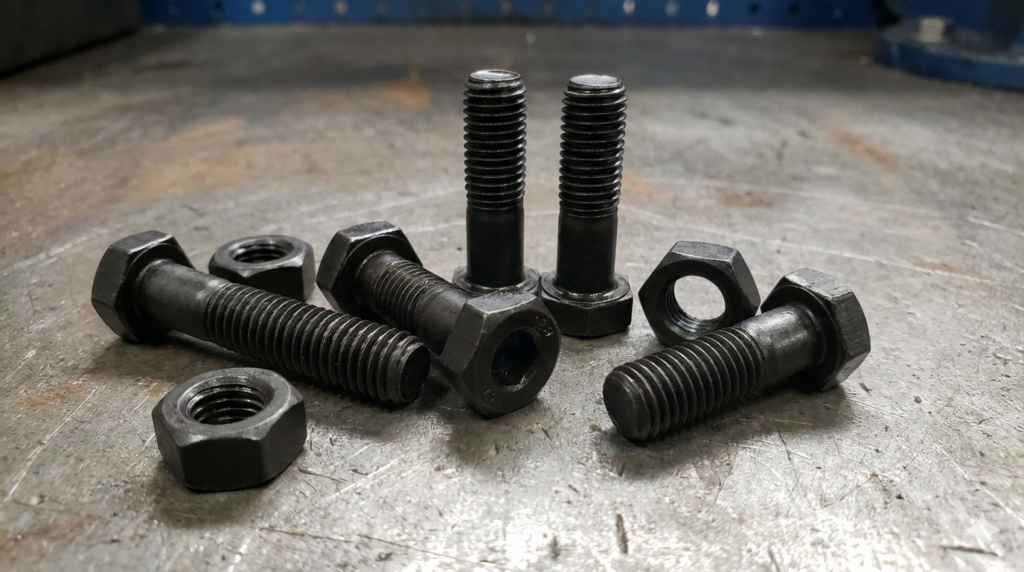
In the world of metal finishing, durability and aesthetics often go hand in hand. Black Oxide Treatment—often referred to as blackening or bluing—is one of the most common chemical surface treatments used in industrial production.
Whether you are manufacturing precision machine parts or military-grade tools, understanding this process is crucial. This treatment creates an oxide film on the metal surface to isolate it from the air and prevent rust. Because it eliminates light reflection, it is also a standard coating method for military equipment and tactical knives.
The Science Behind the Finish
The core principle of this treatment is the conversion of the steel surface into a dense, smooth layer of Ferroferric Oxide (Fe3O4) using strong oxidants. This thin layer protects the internal steel from further oxidation.
Technically, there is a distinction based on the temperature used during the process:
- Bluing: Occurs at high temperatures (approximately 550°C), resulting in a sky-blue hue. This is commonly used in weapon manufacturing.
- Blackening: Occurs at lower temperatures (approximately 130–145°C), resulting in a dark black hue. This is the preferred method for general industrial production.
The chemical solution (oxidant) typically consists of Sodium Hydroxide (NaOH), Sodium Nitrite (NaNO2), and Trisodium Phosphate (Na3PO4).
The Step-by-Step Process Workflow
Achieving a high-quality black oxide finish requires a strict operational flow:
1. Clamping Parts must be arranged on custom fixtures or hangers with sufficient spacing. Every surface must be fully immersed in the solution without parts touching each other.
2. Degreasing Any oil residue will severely hinder the formation of the oxide layer. Parts are immersed in a cleaning solution (typically containing Sodium Carbonate and Sodium Hydroxide) at 80–90°C for roughly 30 minutes.
3. Pickling (Acid Wash) A 10–15% Sulfuric Acid solution is used to remove rust. This step also activates the surface molecules of the steel, which helps in generating a thicker and more durable Fe3O4 layer.
4. Oxidation This is the most critical stage. The immersion time and temperature depend heavily on the type of steel:
- High Carbon Steel: Oxidizes faster; requires about 40 minutes at 120–130°C.
- High Alloy/High-Speed Steel: Requires higher temperatures (up to 150°C) and longer times (up to 80 minutes) to overcome surface resistance.
5. Saponification After oxidation, parts are soaked in a hot soap solution (80–100°C) for 10 minutes. This forms a protective iron stearate film, further increasing corrosion resistance.
6. Quality Inspection A standard test involves dipping a sample part into a 2% Copper Sulfate solution for 20 seconds. If the black finish does not fade or peel, the batch is considered qualified.
Troubleshooting Common Defects
Even with a robust process, chemical imbalances can lead to visual defects. Here is how to fix them:
- Reddish-Brown Spots: Usually caused by an over-concentration of Sodium Hydroxide. Solution: Add water and Sodium Nitrite to balance the concentration.
- Pale Grey Finish: Caused by the Sodium Hydroxide concentration being too low. Solution: Supplement with more NaOH.
- “Flowering” (White Spots): Usually caused by insufficient oxidation time. Solution: Extend the immersion time.
- Greenish Surface: A sign of over-oxidation due to excessive temperatures. Solution: Carefully add cold water and NaOH to lower the tank temperature.
Conclusion
Black oxide treatment is a sophisticated balance of chemistry and precision. By monitoring solution concentrations—specifically NaOH and NaNO2—every few hours, manufacturers can ensure a consistent, durable, and professional finish for all steel components.